

October 29, 2025
A Different Kind of Season on the Gulf
Autumn in Miramar Beach feels like the Gulf taking a deep breath. The crowds thin, the air cools, and the sea turns glass-clear under a softer sun. While the beaches quiet down, another rhythm begins just offshore — the playful arcs of dolphins slicing through the surface and the shimmer of fish schooling around the Dolphin Reef.
For locals and curious visitors, fall and winter bring a new perspective on the coast. You don’t need summer heat to enjoy the water; you just need curiosity, a wetsuit, and an appreciation for the life that thrives when the beach finally goes calm.
What Is the Dolphin Reef?
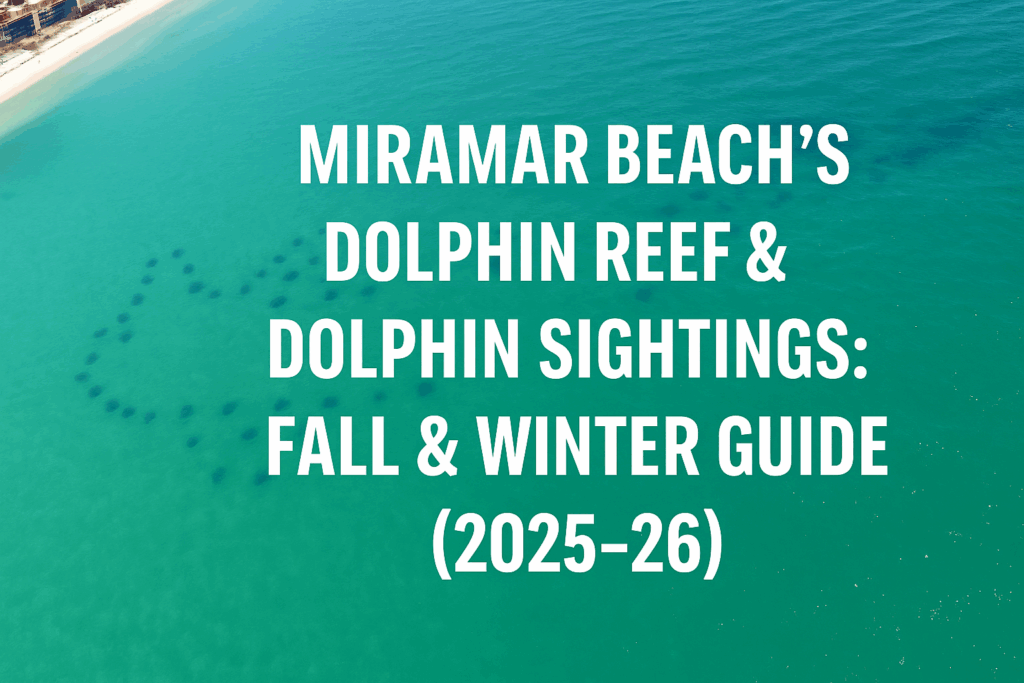
Anchored about 685 feet from the shore at the Miramar Beach Regional Access, the Dolphin Snorkel Reef is part of the South Walton Artificial Reef Association’s (SWARA) network of near-shore marine habitats. More than 70 concrete reef modules were placed in a formation shaped like a bottlenose dolphin, giving the site both symbolic and ecological value.
The water over the reef ranges from 12 to 20 feet deep, shallow enough for snorkelers and paddle-boarders yet dynamic enough to host a surprising diversity of marine life. Schools of spadefish and sheepshead drift between the structures, while octopuses, sea urchins, and small rays take shelter in the crevices.
During cooler months, visibility often improves. North winds push sediment away from shore, leaving the water unusually clear — a bonus for anyone exploring with a mask and fins.
Dolphins in the Wild
Of course, the reef’s namesake isn’t just a shape beneath the waves. Bottlenose dolphins are year-round residents of the Gulf of Mexico, and Miramar Beach sits along one of their most active coastal corridors.
Through fall and winter, pods of dolphins are frequently spotted near the reef and along the sandbar line. The calmer tourist season gives them space to move closer to shore. Locals often see them in the early morning, surfacing in synchrony like clockwork before disappearing into the blue.
These aren’t trained performers but wild animals — intelligent, social hunters communicating through clicks and whistles. Marine biologists note that cooler water temperatures in late fall bring baitfish closer to shore, and dolphins follow the feast.
Why Fall and Winter Are Special
The off-season creates ideal conditions for both humans and wildlife. Water temperatures hover in the mid-60s °F (18–20 °C) through much of November and December, crisp but manageable with a light wetsuit. With fewer boats and swimmers, the Gulf’s surface often turns mirror-still.
For snorkelers, that means better visibility and calmer entry. For wildlife enthusiasts, it’s a chance to experience the coast with fewer distractions — the sound of breathing through a snorkel, the flash of silver fish, the sudden appearance of a dorsal fin out beyond the reef.
Experiencing the Dolphin Reef in Cooler Weather
While summer visitors often wade straight in with snorkel gear, the fall and winter experience requires a bit more preparation. A 3 mm wetsuit keeps you comfortable, and an early-morning or midday visit maximizes sunlight and clarity.
Reaching the reef is a modest adventure: paddle a kayak or stand-up board about 200 yards from shore, or swim out during calm conditions if you’re a confident swimmer. Many local shops rent boards and snorkel gear through the off-season, and guided tours operate on weather-appropriate days, offering instruction and safety supervision without disturbing marine life.
On calm days, you can trace the dolphin-shaped outline from above — a whimsical touch that sets Miramar Beach’s reef apart from traditional rectangular reef deployments.
Wildlife Beyond Dolphins
Cooler months bring more than dolphins. Anglers and divers often report increased sightings of red drum, pompano, and Spanish mackerel chasing baitfish near the reef. Sea turtles occasionally linger later into the year, especially if the autumn water stays warm.
Below the surface, corals and sponges continue to colonize the modules, forming an ever-thickening mosaic of color. The reef acts as both shelter and buffet, drawing everything from small crustaceans to larger predator fish. Every year it becomes a little more alive.
Etiquette for Dolphin and Reef Encounters
Respecting wildlife ensures these experiences remain sustainable.
- Keep your distance. Wild dolphins are protected under the Marine Mammal Protection Act. Observe them from at least 50 yards away and never chase or feed them.
- Minimize noise. Loud engines and shouting disrupt communication between dolphins.
- Leave no trace. Secure all gear, and avoid standing on or touching reef structures. Even small abrasions can harm the living organisms growing on them.
- Anchor wisely. If paddling, use designated mooring buoys or anchor in sand away from the reef modules.
Simple courtesy keeps Miramar Beach’s marine life healthy — and ensures future visitors experience the same sense of wonder.
Planning Your Visit
Best Times:
- October–December: calm water, bright sunlight, high dolphin activity.
- January–February: cooler but exceptionally clear water; great for photography.
Visibility:
10–30 feet on average, improving after cold fronts when winds shift northward.
Gear Tips:
Mask, snorkel, fins, light wetsuit, reef-safe sunscreen, and a waterproof camera.
Access:
Launch from the Miramar Beach Regional Access #49. Look for marker posts indicating the reef’s alignment offshore. Always check local surf reports for wind and wave height before venturing out.
Dolphin Sightings from Shore
You don’t need to get wet to enjoy the show. Many visitors spot dolphins from the beach itself or from Scenic Gulf Drive’s coastal overlooks. Early mornings are best, especially after a quiet night when the Gulf resembles glass.
Locals swear by two indicators: seabirds circling low (a sign of feeding activity) and calm, warm currents just offshore. Patience helps — dolphins move unpredictably, but persistence usually pays off with a sighting or two before the day warms.
Eco-Tourism and the Off-Season Advantage
For Miramar Beach, the Dolphin Reef and seasonal dolphin activity highlight a growing emphasis on eco-tourism. Off-season travelers contribute to the economy without the high environmental strain of summer crowds.
The fall and winter period allows local marine ecosystems to recover while still supporting a smaller, more mindful visitor base. Beachgoers who visit in cooler months often describe a different kind of connection — fewer umbrellas, more space to breathe, and a sense that the Gulf itself finally has room to stretch.
Community initiatives like SWARA’s reef network prove that sustainable recreation and environmental stewardship can coexist beautifully along the Emerald Coast.
Preparing for 2026: What’s Next
SWARA continues to monitor the health of the Dolphin Reef and surrounding marine life. Plans are in discussion to add more educational signage at beach accesses, encouraging visitors to learn about reef ecology before heading out.
As artificial reefs mature, they evolve from bare structures into miniature ecosystems. By 2026, divers may find thicker coral growth, new fish species, and perhaps even more frequent dolphin visits as the underwater habitat expands.
Miramar Beach stands poised to become not just a relaxation spot, but a case study in how small coastal communities can blend tourism with true environmental care.
Frequently Asked Questions
Q: Can you visit the Dolphin Reef year-round?
A: Yes. The reef is open year-round, though fall and winter bring cooler water and fewer crowds. Check conditions before entering the water.
Q: How far is the reef from shore?
A: About 685 feet — roughly a 5- to 10-minute paddle or short swim for experienced swimmers.
Q: Do you need a guide?
A: Not necessarily, but guided tours are available for safety and local insight. They operate on calm, clear days when visibility is best.
Q: Are dolphin sightings guaranteed?
A: Dolphins are wild animals, so sightings can’t be guaranteed, but fall mornings and calm winter days often provide excellent chances near the reef.
Q: Is snorkeling safe in colder months?
A: Yes, with proper gear like a wetsuit. Water temperatures stay in the mid-60s °F, and conditions are typically calmer with improved clarity.